
Understanding Fit, Materials and Manufacturing Tolerances
Protective caps and plugs may appear simple, but selecting the best product for an application requires more than matching a diameter. Proper fit, material selection, and manufacturing tolerances all influence how well a protective component performs.
Whether you’re protecting threads during shipping, masking parts for finishing, or sealing openings during assembly, understanding these factors helps ensure reliable protection while avoiding unnecessary costs.
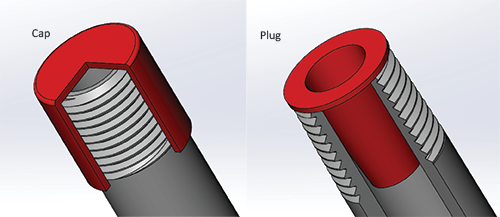
A cap is applied over an object. A plug is inserted into an object.
Start with the Right Fit
Interference Fit
The first step in selecting a protective cap or plug is understanding how it will fit the part. While that sounds straightforward, several factors influence how secure the fit will be.
Most protective caps and plugs are designed with a slight interference fit. This means the inside diameter of a cap is intentionally a little smaller than the outside diameter of the part it protects, or the outside diameter of a plug is slightly larger than the opening it fills.
This controlled interference allows the product to remain securely in place during handling, storage, and transportation while still being easy to install and remove.
Common Causes of Poor Fit
Improper performance is often caused by one of these issues:
- Measuring outside instead of inside diameters
- Ignoring manufacturing tolerances
- Selecting the wrong material
- Choosing excessive interference
- Insufficient insertion depth
- Using a cap where a plug is required
Fortunately, these issues are easy to avoid with proper product selection.
Retention Features
Depending on the application, products may include features designed to improve retention while matching specific application requirements.
- Internal ribs
- External ribs
- Tapered walls
- Flanges
- Threads
- Snap features
- Flexible sealing lips
Material Selection Matters
Different applications require different materials. The operating environment often determines which material will provide the best performance.
Vinyl
Vinyl provides excellent flexibility and conforms well to irregular surfaces.
Typical advantages include:
- Easy installation
- Attractive appearance
- Flexible fit
- Multiple hardness options
- Wide color selection
Ideal for general protection and finished products.
LDPE
LDPE offers greater rigidity and dimensional stability.
Advantages include:
- Excellent impact resistance
- Durable construction
- Specialized molded features
- Threaded designs
- Pull tabs
- Flanges
Often selected for industrial and shipping applications.
Silicone
Silicone performs exceptionally well under elevated temperatures.
Common uses include:
- Powder coating
- Painting
- High-temperature masking
- Reusable applications
EPDM
EPDM provides outstanding resistance to many chemicals and environmental conditions.
It is frequently selected where chemical exposure or outdoor durability is important.
Understanding Manufacturing Tolerances
One of the most overlooked aspects of selecting protective components is manufacturing tolerance.
No manufactured plastic or rubber component is produced to one exact dimension. Every molded part is manufactured within an acceptable dimensional range.
Likewise, the parts being protected also have manufacturing tolerances.
Successful product selection considers both.
Why Tolerances Matter
Imagine protecting a shaft specified at 1.000 inch.
The shaft manufacturer may allow a tolerance of: 1.000 ± .005
Actual shaft diameter could vary between:
- 0.995″ – 1.005″
Your protective cap must accommodate every acceptable variation.
The same principle applies to:
- Tubes
- Pipe
- Hydraulic fittings
- Threads
- Valve bodies
- Machined components
Material Flexibility and Tolerance
Material selection affects how much variation a cap or plug can accommodate.
Flexible materials like vinyl can absorb greater dimensional variation.
More rigid materials like LDPE require tighter dimensional control but often provide better retention and durability.
Understanding this relationship helps engineers choose products that install consistently while remaining securely in place.
Application Considerations
Before selecting a protective component, consider the complete manufacturing process.
Questions to ask include:
- Will the part be exposed to heat?
- Will chemicals be present?
- Does it require repeated installation?
- Is appearance important?
- Will the product remain installed during shipping?
- Does it need to resist vibration?
- Is contamination prevention critical?
The answers help determine the ideal combination of fit, material, and design.
We Are Here To Help
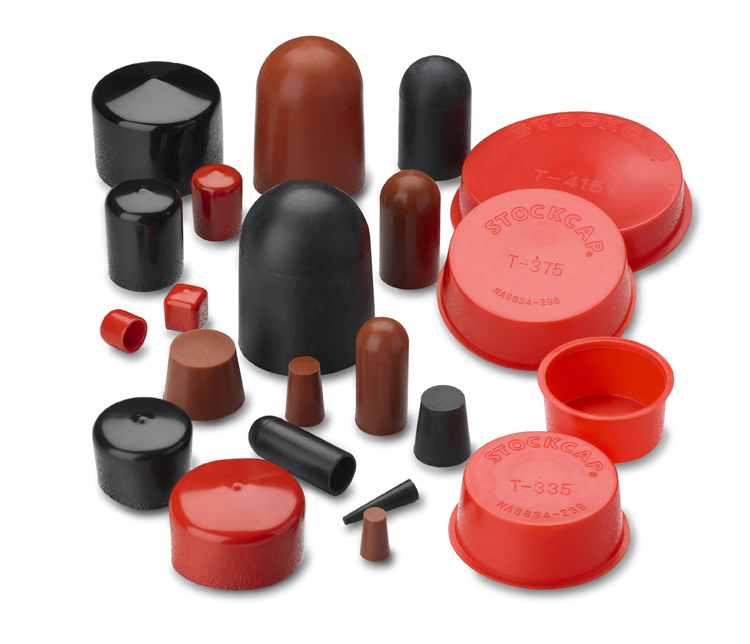
With thousands of standard protective caps and plugs available in multiple materials, sizes, and designs, selecting the best solution doesn’t have to be difficult.
Our application specialists help engineers and purchasing professionals every day by recommending products based on:
- Dimensions
- Material requirements
- Operating environment
- Manufacturing process
- Industry standards
- Performance expectations
Whether you’re protecting a single component or designing a new production line, StockCap can help you identify the right solution.